


The Autonomic Nervous System is More Clinically Relevant than Previously Thought

People who suffer from chronic fatigue, sleep disorders, digestive problems, or persistent stress often hear the phrase: “The test results are normal.” For many of those affected, this is frustrating. After all, the symptoms are real—even if no clear organic cause can be found.
In recent years, the autonomic nervous system has emerged as a field of research that sheds new light on many of these symptoms. For a long time, however, it played a rather minor role in diagnosis and treatment. Today, there is strong evidence to suggest that it plays a significantly greater role in numerous diseases and conditions than previously thought.
The nervous system that works behind the scenes
The autonomic nervous system controls nearly all vital functions that we do not consciously influence. These include, among others:
- Heart rate
- Blood pressure
- Breathing
- Digestion
- Metabolism
- Immune responses
- Sleep-wake cycle
Unlike the somatic nervous system, it works around the clock in the background. It ensures that the body can adapt to changing demands. Simply put, the autonomic nervous system consists of two opposing systems: the sympathetic and the parasympathetic nervous systems. While the sympathetic nervous system activates the body and prepares it for action, the parasympathetic nervous system is responsible for rest, recovery, and regeneration. If this finely tuned balance is disrupted, a wide range of symptoms can arise.

When the body is constantly on high alert
In our modern world, many people find themselves in a state of heightened tension for long periods of time. Work-related pressure, constant availability, lack of sleep, and psychological stress can cause the nervous system to remain in “active mode” all the time.
The effects often develop gradually:
- Exhaustion despite getting enough rest
- Difficulty concentrating
- Sleep disturbances
- Digestive problems
- Heart palpitations or inner restlessness
- Increased susceptibility to stress
These symptoms are often viewed and treated in isolation. As a result, the underlying dysregulation of the autonomic nervous system often goes unrecognized.
More than just stress: the link to chronic diseases
Research is increasingly showing that the autonomic nervous system plays a role in more than just stress. There is also evidence of disturbances in autonomic regulation in numerous chronic diseases. These include, among others:
- Migraine
- Depression
- Anxiety Disorders
- Parkinson’s Disease
- Chronic Pain Syndromes
- Chronic Inflammatory Bowel Diseases
- Long COVID and ME/CFS
There is growing discussion about whether impaired regulation of the nervous system might not only be a side effect but, in some cases, even a contributing factor to certain symptoms. This became particularly evident during the COVID-19 pandemic. Many people with Long COVID report symptoms such as exhaustion, heart palpitations, exercise intolerance, or difficulty concentrating. Numerous researchers now suspect that disturbances in the autonomic nervous system may play a significant role in these conditions.

The vagus nerve: a key player
When people talk about the autonomic nervous system, one name often comes up: the vagus nerve. It is the longest cranial nerve in the body and connects the brain to numerous organs, including the heart, lungs, and digestive tract. Its main function is to promote calm, regeneration, and recovery. A properly functioning vagus nerve helps the body resolve stress responses, regulate inflammation, improve sleep, and restore balance after periods of stress. This is precisely why it is increasingly becoming the focus of scientific research.
New perspectives through neuromodulation
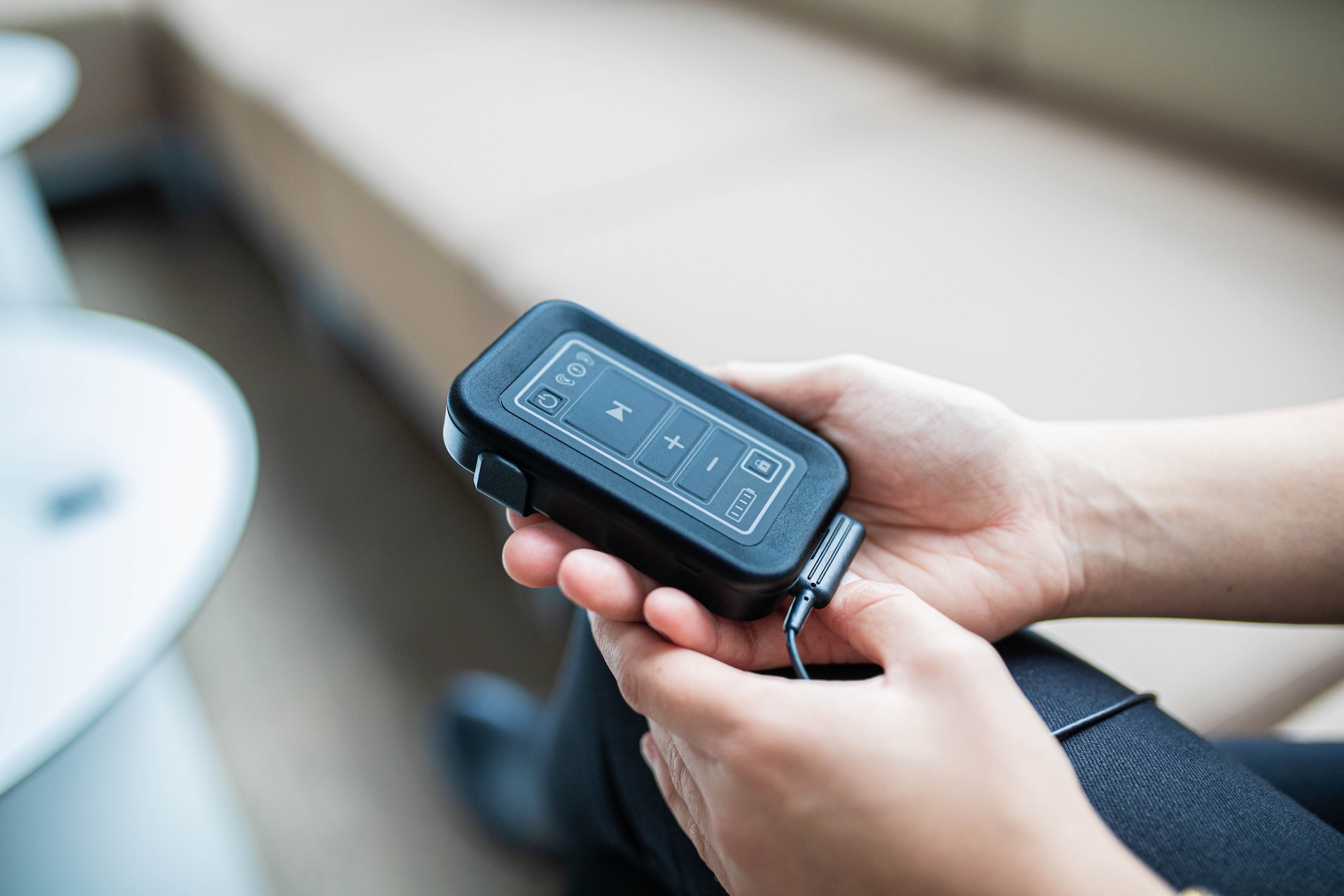
If the autonomic nervous system plays such a central role, the question arises: Can it be specifically influenced? This is precisely where so-called neuromodulation comes into play. In this process, specific nerve pathways are stimulated by electrical impulses to support regulatory processes in the body.
Transcutaneous vagus nerve stimulation (tVNS) is currently the subject of particularly intensive research.
In this non-invasive procedure, a branch of the vagus nerve is stimulated through the skin near the outer ear. The goal is to promote the activity of the parasympathetic nervous system and thereby stabilize the autonomic balance. The method is currently being studied in the following conditions, among others: Depression, Migraine, Parkinson’s disease, sleep disorders, Long COVID, chronic pain. Although the results are not yet conclusive, they do show that the targeted modulation of the nervous system is a promising field of research.
Why diagnostics needs to be rethought
The growing importance of the autonomic nervous system also raises questions for medical diagnostics. Many traditional tests measure structural changes or laboratory values. Dysfunctions of autonomic regulation, however, often remain undetected. That is why methods capable of more accurately mapping the nervous system’s function are gaining importance. These include, for example, the measurement of heart rate variability or other autonomic parameters. They provide insights into how well the body can switch between activation and recovery—and thus into an area that may be more important for health and well-being than has long been assumed.
Between wellness trends and medicine
The growing interest in the vagus nerve has led to the emergence of numerous products designed for “vagus nerve activation.” These range from breathing exercises and relaxation techniques to technical devices. From a medical perspective, however, it is important to make a clear distinction: While many wellness offerings are aimed at general well-being, medical devices are subject to strict regulatory requirements. They must demonstrate their safety and suitability for specific indications. Especially in cases of health complaints or chronic conditions, one should therefore not rely solely on advertising claims, but rather on scientifically validated and appropriately approved procedures.

A system that deserves more attention
The autonomic nervous system is neither a new organ nor a new discovery. Nevertheless, its full significance is only gradually being recognized. A growing body of scientific evidence shows that numerous symptoms and diseases cannot be viewed in isolation. They are often closely linked to the body’s regulatory mechanisms.
For medicine, this means a shift in perspective: away from focusing exclusively on individual symptoms, toward a better understanding of the systems that make health possible in the first place. Perhaps this is precisely one of the most exciting developments of the coming years. After all, the better we understand how the autonomic nervous system works, the more effectively we can help people regain their balance.
nervous system, vagus nerve stimulation

C&C Autor aus Erlangen
Er ist Experte für Medizintechnik und digitale Gesundheitslösungen. Seit 2024 verantwortet er bei tVNS Technologies GmbH die Bereiche Marketing, Vertrieb und Business Development, wird 2025 in die Geschäftsführung berufen. Zuvor war er über ein Jahrzehnt in führenden Positionen im Medizintechnik-Sektor tätig, unter anderem als Mitglied der Geschäftsleitung des Branchennetzwerks Medical Valley EMN e.V. sowie als Mitbegründer des Kardiologie-Startups ProCarement. Ein besonderer Fokus seiner aktuellen Arbeit liegt auf der transkutanen Vagusnervstimulaton (tVNS), einer innovativen Therapie-Option für neurologische und chronische Erkrankungen.