

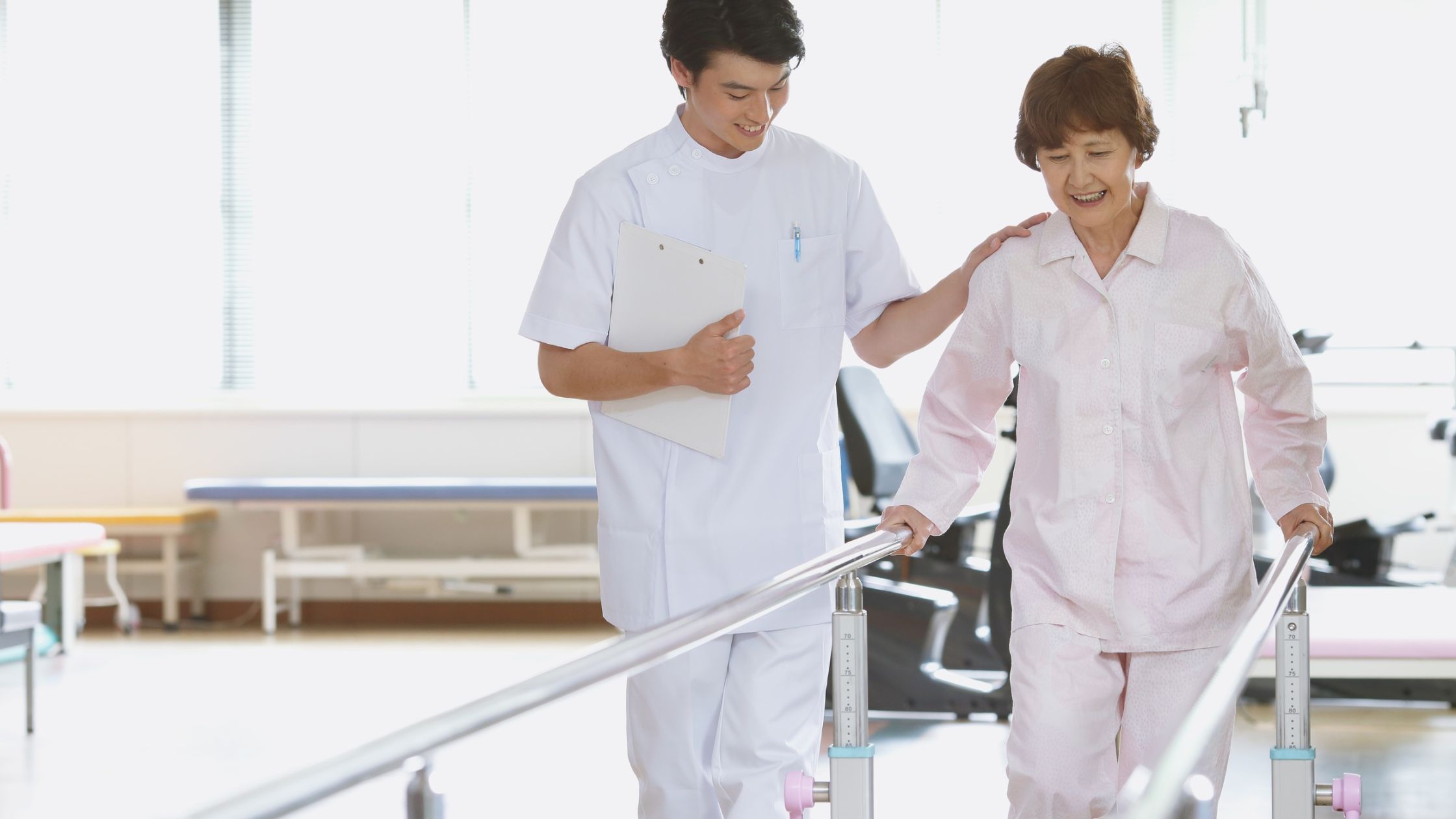
Stroke Rehabilitation: Why Progress Often Stalls
A stroke changes a person’s life from one moment to the next. Suddenly, movements that used to be second nature are no longer possible. Many survivors then put an enormous amount of effort into their rehabilitation. Yet the success they had hoped for fails to materialize.
After suffering a stroke, patients exercise regularly, attend physical therapy, and work consistently on their recovery. Yet despite all their efforts, many eventually experience the same thing: their progress slows down or seems to stop altogether. Why does this happen? And are there new approaches that could help push these limits further?
When stroke rehabilitation hits a snag
Our brain has an amazing ability to adapt. Experts refer to this as neuroplasticity. This process involves the formation of new connections between nerve cells that can partially take over lost functions. These adaptive processes are particularly active in the first few weeks and months after a stroke. However, at some point, progress often seems to stall. The hand remains immobile, grasping is difficult, or the arm does not respond as one would hope.
For a long time, it was assumed that a lack of exercise was primarily to blame. Today, however, a more nuanced picture is emerging. Researchers suspect that it is not only the intensity of exercise that matters, but also the brain’s ability to form new connections.
The brain doesn’t learn just through practice
Anyone learning a new language or practicing a musical instrument needs repetition. The same is true after a stroke. But learning doesn’t happen through practice alone. It also requires the right biological conditions. Neurotransmitters such as norepinephrine and acetylcholine play an important role in this process. They influence attention, memory, and the brain’s ability to form new networks. It is precisely these processes that are increasingly taking center stage in stroke research. Today, the question is no longer just, “How much does a patient practice?” but also, “How capable is the nervous system of learning at this moment?”
The underestimated role of the autonomic nervous system
One area that has long been overlooked is the autonomic nervous system. It unconsciously controls numerous bodily functions, such as heart rate, breathing, digestion, and stress responses. The vagus nerve is of particular interest in this context. It connects the brain to many organs and is considered a central hub between physical and neurological regulation. Scientists suspect that the vagus nerve not only influences relaxation and recovery but also learning and adaptation processes in the brain.… weiterlesen

C&C Autor aus Erlangen
Er ist Experte für Medizintechnik und digitale Gesundheitslösungen. Seit 2024 verantwortet er bei tVNS Technologies GmbH die Bereiche Marketing, Vertrieb und Business Development, wird 2025 in die Geschäftsführung berufen. Zuvor war er über ein Jahrzehnt in führenden Positionen im Medizintechnik-Sektor tätig, unter anderem als Mitglied der Geschäftsleitung des Branchennetzwerks Medical Valley EMN e.V. sowie als Mitbegründer des Kardiologie-Startups ProCarement. Ein besonderer Fokus seiner aktuellen Arbeit liegt auf der transkutanen Vagusnervstimulaton (tVNS), einer innovativen Therapie-Option für neurologische und chronische Erkrankungen.