


Stroke Rehabilitation: Why Progress Often Stalls
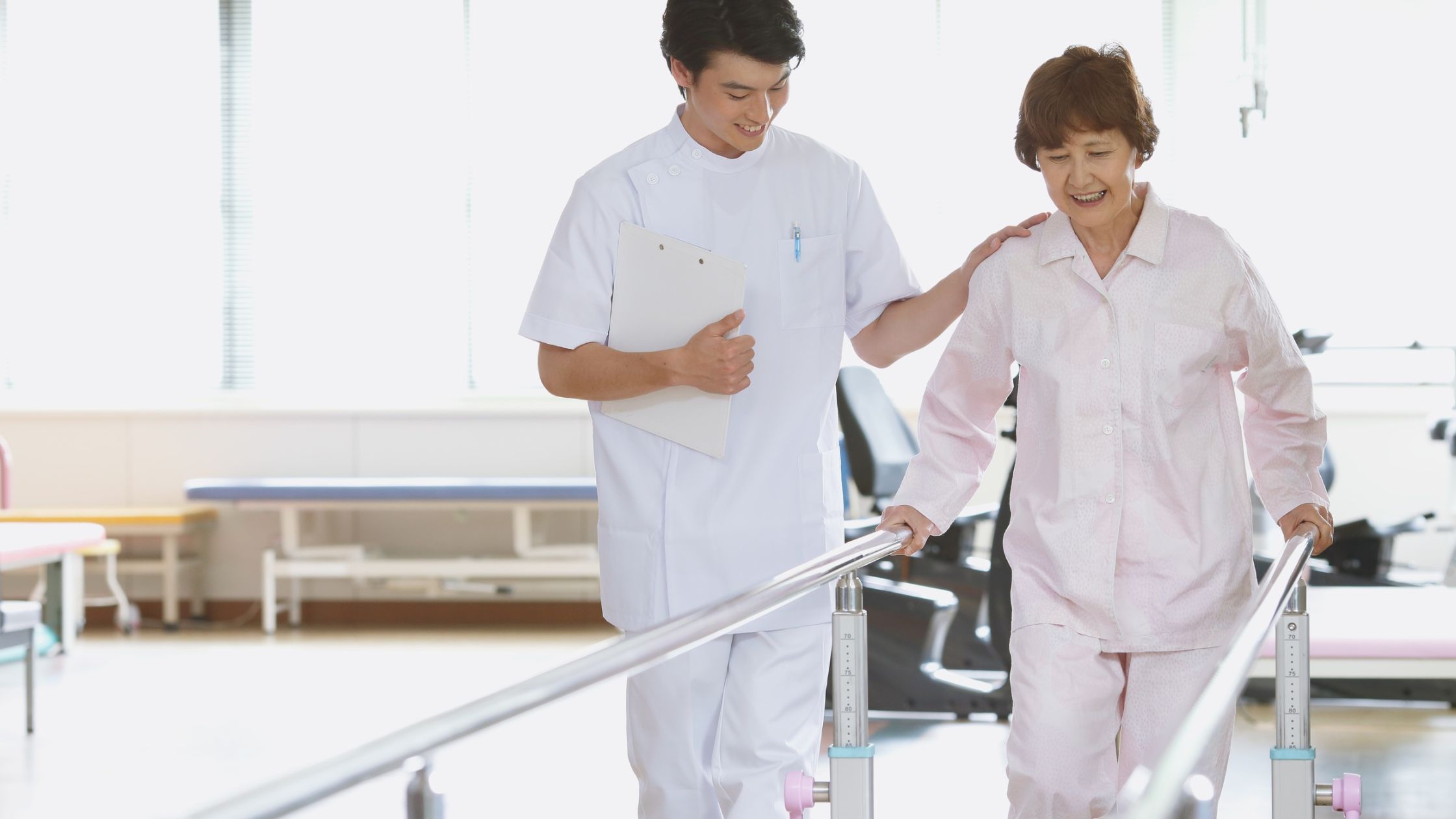
A stroke changes a person’s life from one moment to the next. Suddenly, movements that used to be second nature are no longer possible. Many survivors then put an enormous amount of effort into their rehabilitation. Yet the success they had hoped for fails to materialize.
After suffering a stroke, patients exercise regularly, attend physical therapy, and work consistently on their recovery. Yet despite all their efforts, many eventually experience the same thing: their progress slows down or seems to stop altogether. Why does this happen? And are there new approaches that could help push these limits further?
When stroke rehabilitation hits a snag
Our brain has an amazing ability to adapt. Experts refer to this as neuroplasticity. This process involves the formation of new connections between nerve cells that can partially take over lost functions. These adaptive processes are particularly active in the first few weeks and months after a stroke. However, at some point, progress often seems to stall. The hand remains immobile, grasping is difficult, or the arm does not respond as one would hope.
For a long time, it was assumed that a lack of exercise was primarily to blame. Today, however, a more nuanced picture is emerging. Researchers suspect that it is not only the intensity of exercise that matters, but also the brain’s ability to form new connections.

The brain doesn’t learn just through practice
Anyone learning a new language or practicing a musical instrument needs repetition. The same is true after a stroke. But learning doesn’t happen through practice alone. It also requires the right biological conditions. Neurotransmitters such as norepinephrine and acetylcholine play an important role in this process. They influence attention, memory, and the brain’s ability to form new networks. It is precisely these processes that are increasingly taking center stage in stroke research. Today, the question is no longer just, “How much does a patient practice?” but also, “How capable is the nervous system of learning at this moment?”
The underestimated role of the autonomic nervous system
One area that has long been overlooked is the autonomic nervous system. It unconsciously controls numerous bodily functions, such as heart rate, breathing, digestion, and stress responses. The vagus nerve is of particular interest in this context. It connects the brain to many organs and is considered a central hub between physical and neurological regulation. Scientists suspect that the vagus nerve not only influences relaxation and recovery but also learning and adaptation processes in the brain. As a result, it could play an important role in rehabilitation following a stroke.
Can neurostimulation open up new possibilities?
These findings gave rise to the idea of specifically stimulating the vagus nerve. Earlier studies using implanted vagus nerve stimulators had already shown that the combination of neurostimulation and rehabilitation can lead to better results than training alone. In a widely cited study, arm and hand function improved more significantly than in the control group, which received only rehabilitative measures.
However, implantation requires surgery. For this reason, attention has increasingly turned to transcutaneous vagus nerve stimulation (tVNS). In this method, stimulation is delivered through the skin at the outer ear—without surgery.


The TRICEPS study: a new research approach
The British TRICEPS-Studie (Transcutaneous Limb Recovery Post-Stroke) is currently receiving a great deal of attention. It is investigating whether transcutaneous vagus nerve stimulation, combined with intensive arm training, can improve recovery after a stroke. Researchers at several British centers are studying whether this approach can lead to a more lasting restoration of motor functions.
The idea behind it is simple: While patients perform their movement exercises, the vagus nerve simultaneously receives electrical impulses. This is intended to support precisely those neuroplastic processes that are crucial for motor learning. Only the study’s analysis will reveal whether this approach actually leads to better outcomes. However, there is great interest among experts because this is the first time a non-invasive solution is being investigated on a large scale.
Hope instead of promises of miracles
Of course, it would be wrong to speak of a revolution in stroke rehabilitation. Even modern neurostimulation is no substitute for physical therapy or occupational therapy. Movement, exercise, and patience remain the foundation of any successful rehabilitation. Nevertheless, current research shows that perspectives are shifting. Instead of focusing exclusively on muscles and movement patterns, attention is increasingly turning to the nervous system itself. Perhaps this is precisely where the key to the future lies: not just training more, but creating conditions under which the brain can learn better again in the first place.

Quality and safety play an important role
As research into transcutaneous vagus nerve stimulation continues to grow, so does interest in related devices. It is important for patients and their families to know that not every product advertised as using neurostimulation is automatically suitable for therapeutic purposes. Particularly in sensitive areas such as stroke rehabilitation, only methods whose safety and clinical application have been scientifically evaluated should be used. Experts therefore recommend ensuring that devices are appropriately approved medical products and that therapeutic supervision is provided.
Looking ahead
For stroke survivors and their families, the most important message may be this: An apparent plateau in stroke rehabilitation does not necessarily mean the end of all opportunities for progress. Research is showing more and more clearly that the brain remains capable of learning even long after a stroke. New approaches, such as neurostimulation, aim to better harness this very potential.
Further studies will have to show whether these methods will become established in rehabilitation over the long term. But even today, they make it clear that stroke rehabilitation is far more than just muscle training—it is, above all, a process of relearning. And learning is a lifelong process.
stroke rehabilitation, vagus nerve stimulation

C&C Autor aus Erlangen
Er ist Experte für Medizintechnik und digitale Gesundheitslösungen. Seit 2024 verantwortet er bei tVNS Technologies GmbH die Bereiche Marketing, Vertrieb und Business Development, wird 2025 in die Geschäftsführung berufen. Zuvor war er über ein Jahrzehnt in führenden Positionen im Medizintechnik-Sektor tätig, unter anderem als Mitglied der Geschäftsleitung des Branchennetzwerks Medical Valley EMN e.V. sowie als Mitbegründer des Kardiologie-Startups ProCarement. Ein besonderer Fokus seiner aktuellen Arbeit liegt auf der transkutanen Vagusnervstimulaton (tVNS), einer innovativen Therapie-Option für neurologische und chronische Erkrankungen.